“The threat of AI is more about the threat of large groups of people with little stake in the future and less to lose”
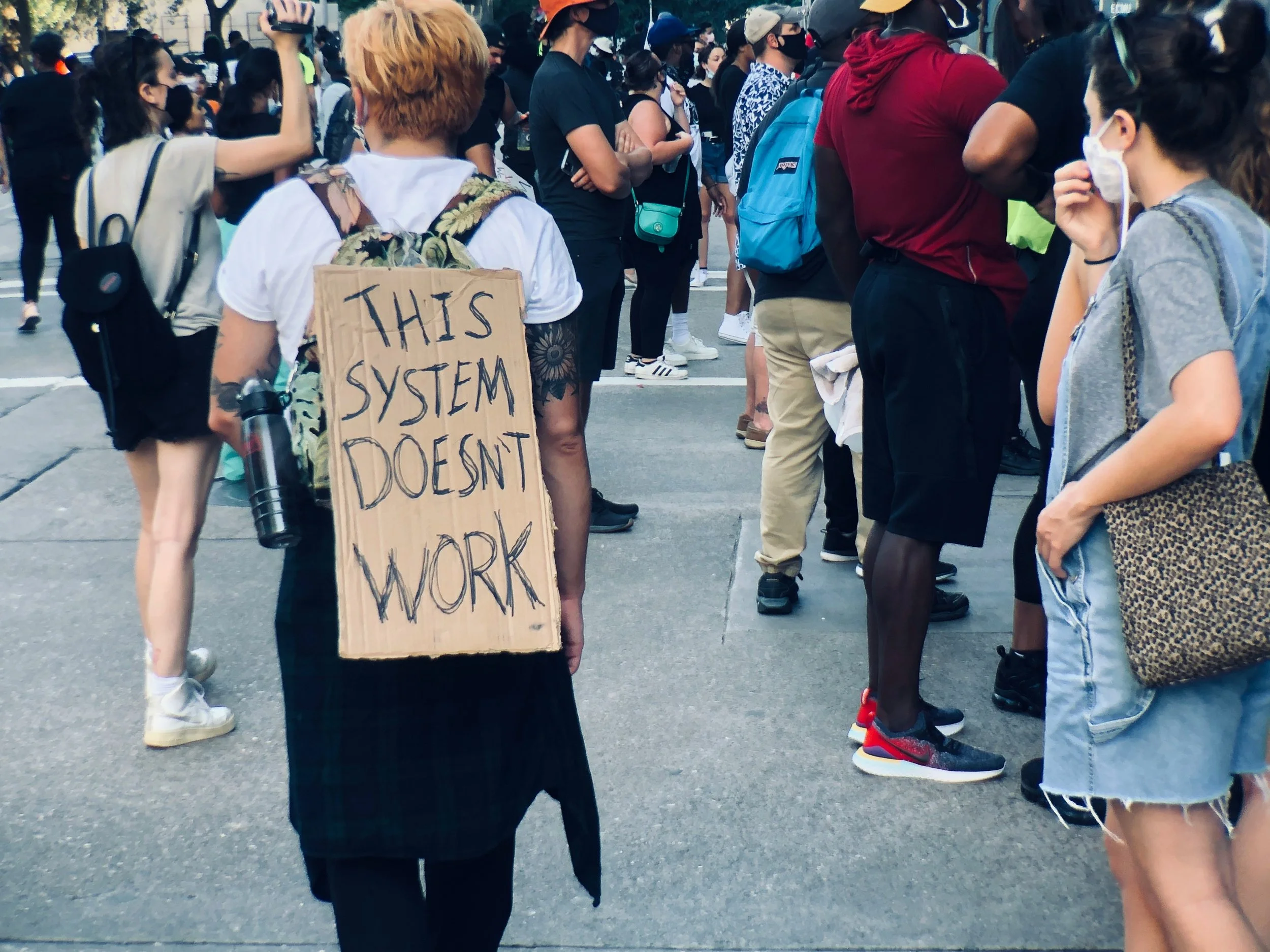
Photo by Tarun Girish on Unsplash
Artificial intelligence (AI) has become the topic everyone seems interested in, yet few truly understand and I include myself in that group. Depending on who you read, AI is about to cure disease and solve climate change or wipe out jobs and destabilise democracy. I have my doubts that it will be as consequential as those at either extreme suggest. I started my working career as a computer programmer, and the old saying, "Garbage in, garbage out," still applies no matter how fast the garbage is processed.
I do agree with the so-called experts that AI is no longer a future technology. It's embedded in medicine, finance, science and everyday work. As one report puts it, AI is shifting from "experimental technology to everyday infrastructure." The future has already started.
So what happens now?
Researchers disagree sharply on how fast AI will advance. Some believe human-level systems could emerge within a decade. Others warn that today's rapid progress may hit limits. Uncertainty seems to be the only real consensus.
Work will change, but the deeper issue is power. Marx's philosophy has never been more important to understand. The sad part is that it has rarely understood, especially by politicians.
AI will reshape jobs across the economy, just as the wheel, electricity, oil and computers did. The IMF estimates that a large share of roles will be affected, especially in advanced economies. Most won't disappear, they'll evolve. This has been the pattern since humans first discovered they could improve their lives through innovation.
The bigger concern is who benefits (cue Marx). Some warn, quite rightly in my view, that the economic gains will concentrate in the hands of those who own the technology. That should surprise no one when we've already seen a handful of questionable individuals accumulate extraordinary wealth through the tech sector. The challenge, as it already is today, will be inequality. The real threat from AI is not the technology itself but the prospect of creating ever-larger groups of people with little stake in the future and less to lose.
In New Zealand, we have the spectacle of Peter Thiel attempting to build a bolthole in the remote South Island. If he thinks he'll be welcomed with open arms, he may be in for a rude shock. Kim Dotcom, who I would argue is a far better person than Thiel (admittedly a very low bar), is likely to be extradited to the United States, and I can't imagine many New Zealanders taking to the streets in protest.
That makes AI's hardest problems political. In many respects, AI needs capitalism to flourish, but it may also accelerate demands for a more socialist (that just means thinking about all citizens) approach to distributing wealth. Capitalism's boom-bust-move-on method has one fundamental limitation on a planetary scale: there is nowhere left to move on to. Dreams of the Moon and Mars remain, for now, the stuff of science fiction.
AI has made it effortless to generate convincing fake images, voices and videos. Misinformation can now be produced at industrial scale. When truth becomes harder to verify, trust itself becomes a political battleground.
Governments around the world are scrambling to regulate AI as quickly as it advances. The OECD's Expert Group on AI Futures highlights the core issues: bias, surveillance, accountability, job displacement, misinformation and democratic resilience. These are all human problems, unless, of course, you don't care about people.
AI is a tool, just like a hammer. It exists to help humans do things better than they could without it. If we remember that - or perhaps relearn it for the thousandth time - I think we'll be fine.