Changes fall short for author
Some writers say library payments still don’t fairly compensate them for use of their books
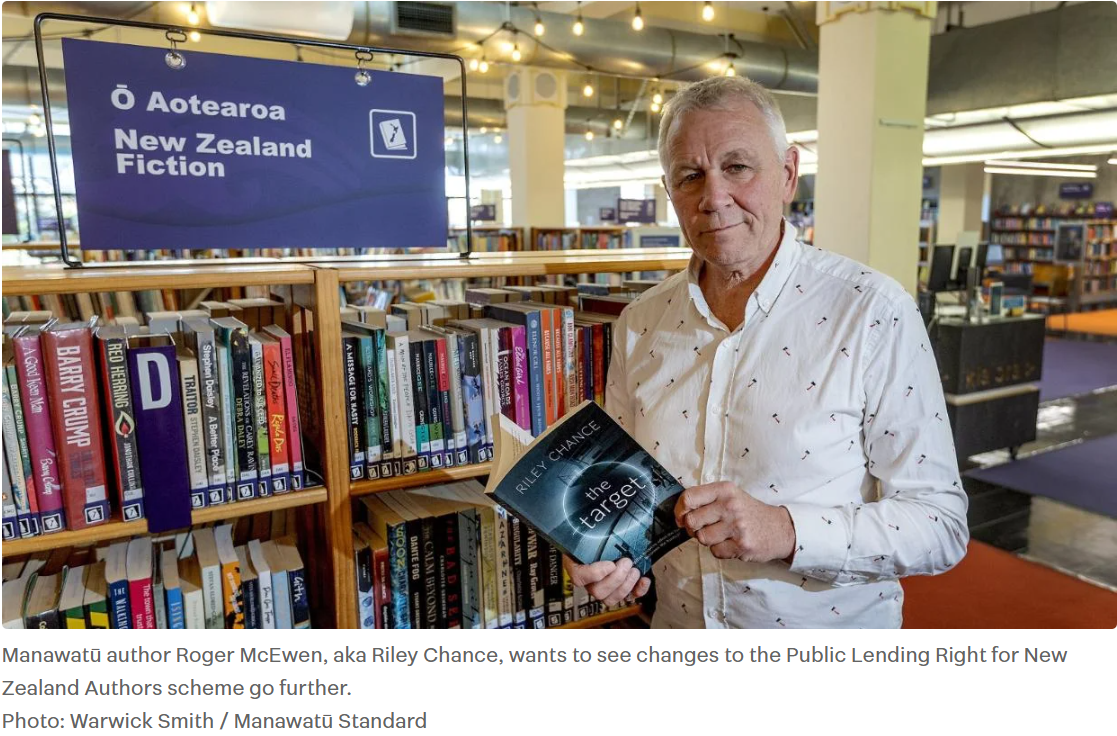
A Palmerston North author believes changes to a government fund that pays people with books held in libraries don’t go far enough to fairly compensate writers.
Internal Affairs Minister Brooke van Velden last month announced changes to the Public Lending Right for New Zealand Authors scheme, lowering the eligibility threshold so more authors would be compensated for the use of their books in libraries.
Previously 50 copies of an author’s book had to be available across libraries to be paid by the Government scheme. Now it has been lowered to 30 copies and about 170 extra authors are expected to be included.
Roger McEwan, who writes under the pen name Riley Chance, welcomed the changes but wanted them to go further.
“It’s tinkering around the edges. It’s not nothing but it’s not really anything.”
He said the fund was created in 1972, starting at $1 million, and although it had increased to $2.4m now, it hadn’t been adjusted for inflation. If it had kept pace with inflation he believed it should be $17m, from which he would receive about $2500 a year to cover costs such as proofreading or cover design.
About 60 copies of his books were in libraries, earning him a few hundred dollars a year. The scheme only covered physical books, not e-books or audiobooks. McEwan believed they should be included because they were popular ways for people to read or listen to books today.
He said lowering the threshold would only share the same amount of money among more authors, “cutting the pie into smaller pieces”.
In a statement, van Velden said during engagement about the fund, people were aware the size of it was not under review and 77.1% of respondents supported the idea of lowering the eligibility threshold.
“The changes made reflect what we heard from authors and I am pleased to be delivering on them.”
She said the work was intended to be about what was achievable in this parliamentary term.
“That meant that broader changes, such as expanding the scope to include digital books, were not part of this review, as it would take more time to develop and implement.”
She said she had been clear her priority was to ensure the existing money was used in the best way.
“These changes strike a balance by broadening access, while also ensuring the fund remains sustainable.”
The New Zealand Society of Authors chief executive Jenny Nagle welcomed the change, but said it was less than the society had been advocating for, and it was still waiting for the recommendations of a 2022 report to be implemented. She said the government was taking goods and services and not compensating the property owner.
“It means authors are the ones paying for most of that access and the small fund that [Public Lending Right] distributes has not met inflation, giving authors an annual pay cut. In this digital age, when over one-third of library borrowing is digital editions, there is no compensation for that at all.”
Van Velden referred the Manawatū Standard to a statement by the Library and Information Association of New Zealand that welcomed the changes as a balance between improving equity and maintaining a sustainable, practical scheme.
“Lowering the threshold will provide greater access for emerging authors, authors from smaller or independent publishers, regional authors and those writing for specialist or local audiences who may not previously have met the eligibility threshold.”